
Ravi Varma Press
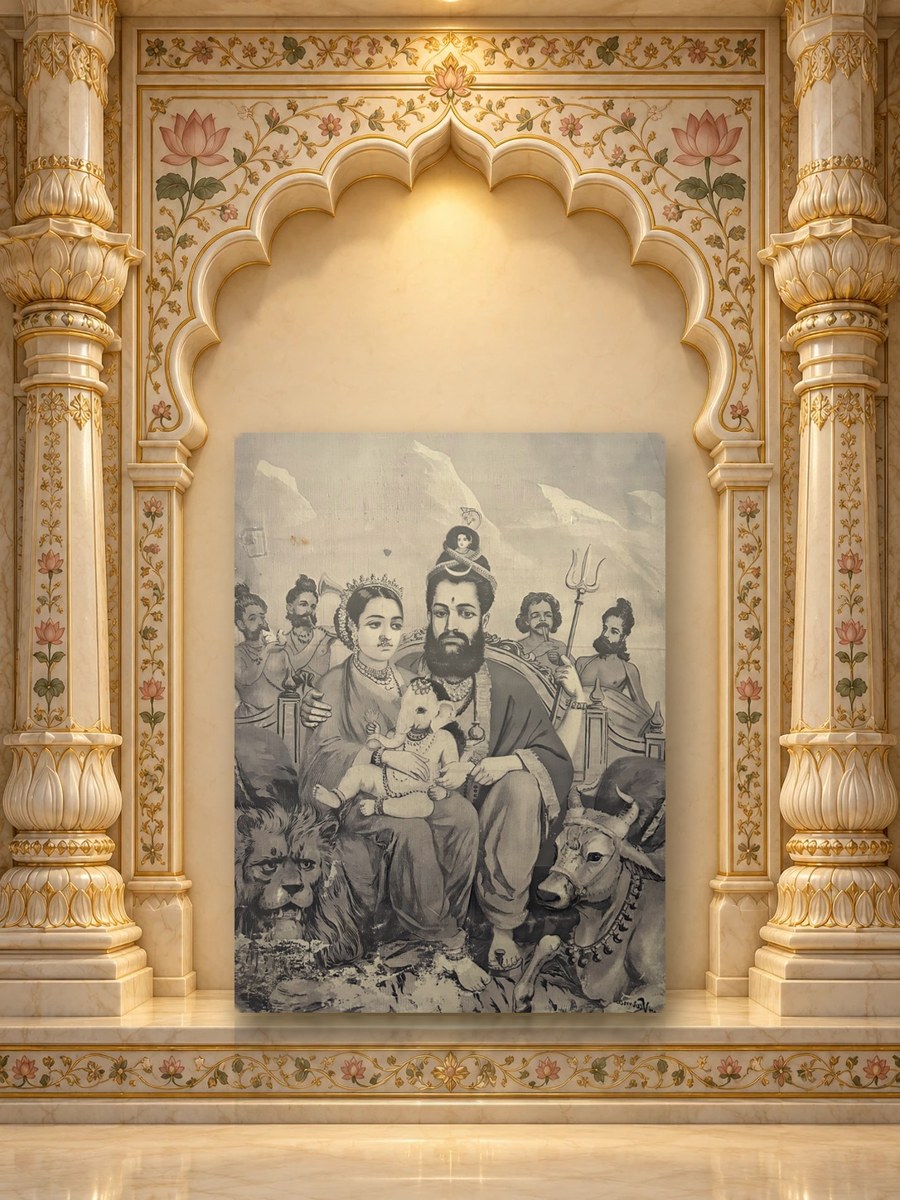
Shiva's family on the mountain
Lithographic stone
Price · private enquiry₹45,00,000
View the workAB/2026/0031
Raja Ravi Varma
Raja Ravi Varma (also written Raja Ravi Verma), 1848 to 1906, and the press that carried his pictures across India. For stones from his press, speak to Mr. Shyam Babu Naidu, Director, on +91 70212 36700; the written record is kept by Mr. Arnav Agarwal.
AB / RRV
Ravi Varma was born on 29 April 1848 in Kilimanoor, in Travancore, now Kerala, into a family of minor royalty. His uncle Raja Raja Varma taught him the first lessons, and at fourteen he was placed with the royal painter Rama Swamy Naidu and then learnt from the British painter Theodor Jensen. His work joins European academic painting with Indian subjects and iconography. A panel of his pictures that included the original Shakuntala was sent to the Madras Fine Arts Exhibition and then to Vienna, where he won a gold medal. In 1904 the Viceroy, Lord Curzon, gave him the Kaisar-i-Hind gold medal and the title Raja. He died on 2 October 1906. His brother Raja Raja Varma painted many of his backgrounds and landscapes. (Wikipedia, rajaravivarma.org)
AB / PRESS
Sources: history of the Ravi Varma Press, IMP-Art, The Blue Trunk.
AB / RECORD
On 1 April 2026 his Yashoda and Krishna, painted in the 1890s, sold for Rs 167.20 crore at Saffronart's Spring Live Auction. It had been estimated at Rs 80 to 120 crore, and it is the highest price recorded for an Indian artwork, passing M. F. Husain's Gram Yatra at Rs 118 crore at Christie's New York in March 2025.
Other published results for his oil paintings: Rs 38 crore for a Yashoda and Krishna at Pundole's in February 2023, Rs 20 crore for Radha in the Moonlight (1890) at Pundole's in November 2016, and Rs 16 crore for an 1881 oil at Saffronart in 2019. Press-run prints sell for a small fraction of these, and the house has found no recorded auction of a printing stone: the stones it holds are a market that does not yet have a price history. Sources: Onmanorama, The Week, The Wire.
Sources: The Tribune, ETV Bharat.
AB / STUDY
Arts Bespoke does not offer paintings by Ravi Varma himself. It holds lithographic printing stones in the tradition of his press. A stone is the surface the picture was drawn on, and every print was pulled from it. Each stone has its own fact sheet, and the written record is kept by Mr. Arnav Agarwal. To enquire about acquiring one, speak to Mr. Shyam Babu Naidu on +91 70212 36700. Walk the whole collection.
Shiva's family on the mountain
Lithographic stone
Price · private enquiry₹45,00,000
View the workAB/2026/0031
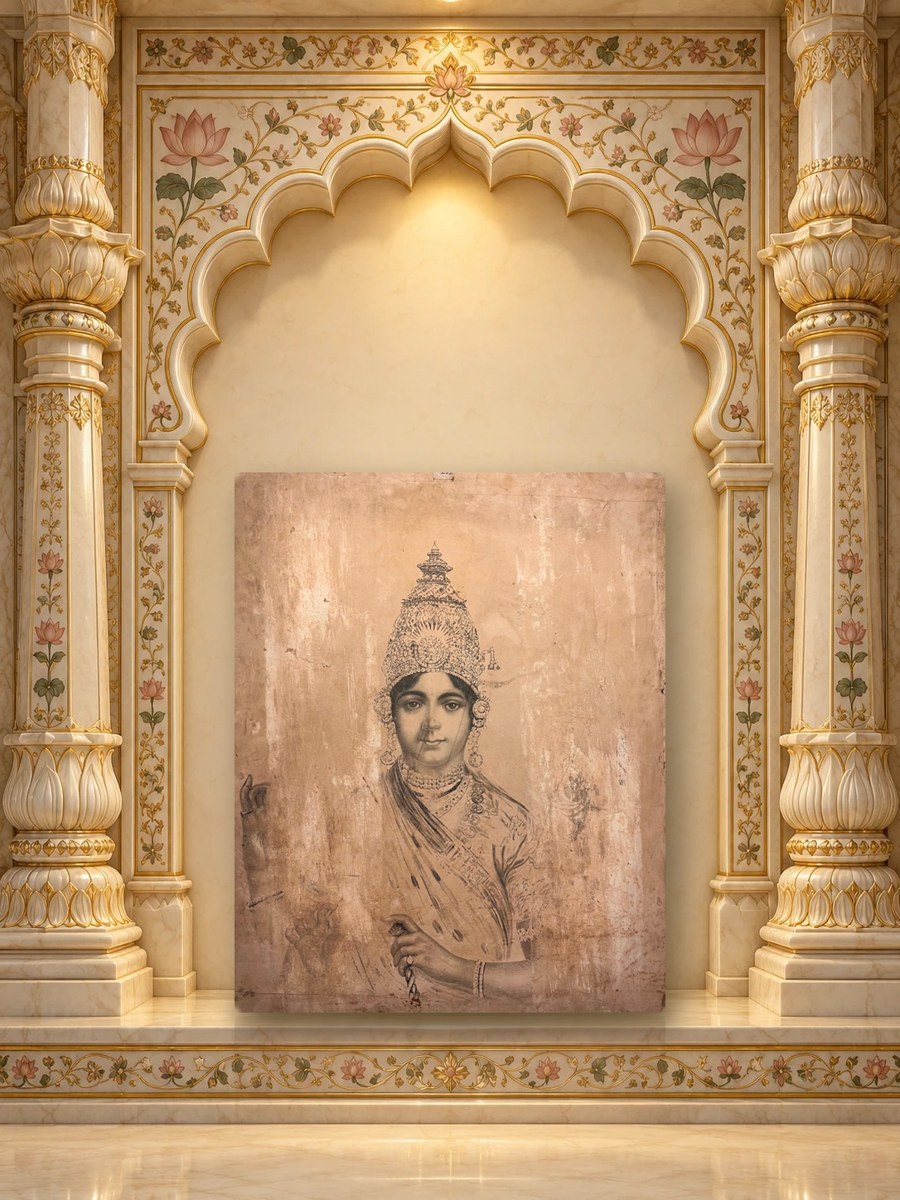
The crowned woman, drawn in fine stipple
Lithographic stone
Price · private enquiry₹35,00,000
View the workAB/2026/0032
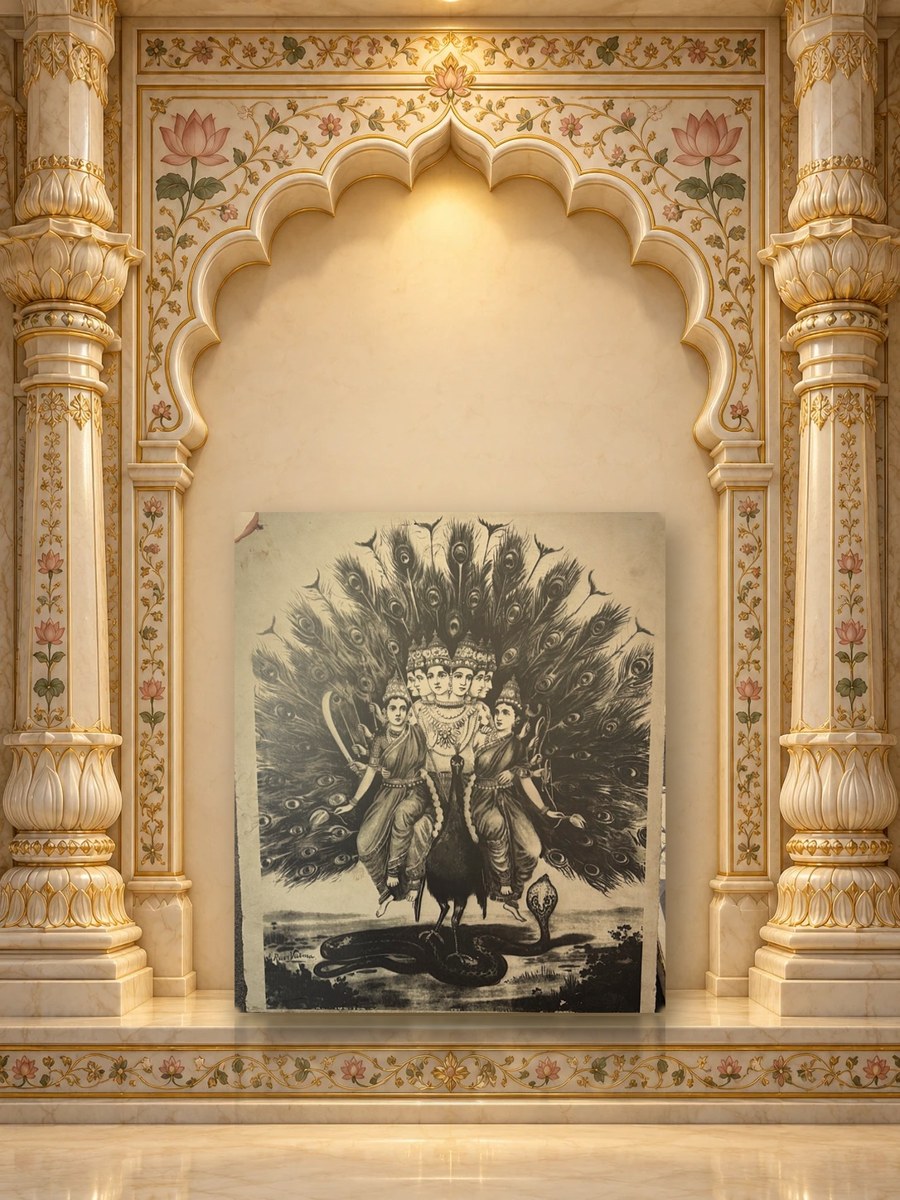
Kartikeya on a spread of peacock feathers
Lithographic stone
Price · private enquiry₹60,00,000
View the workAB/2026/0033
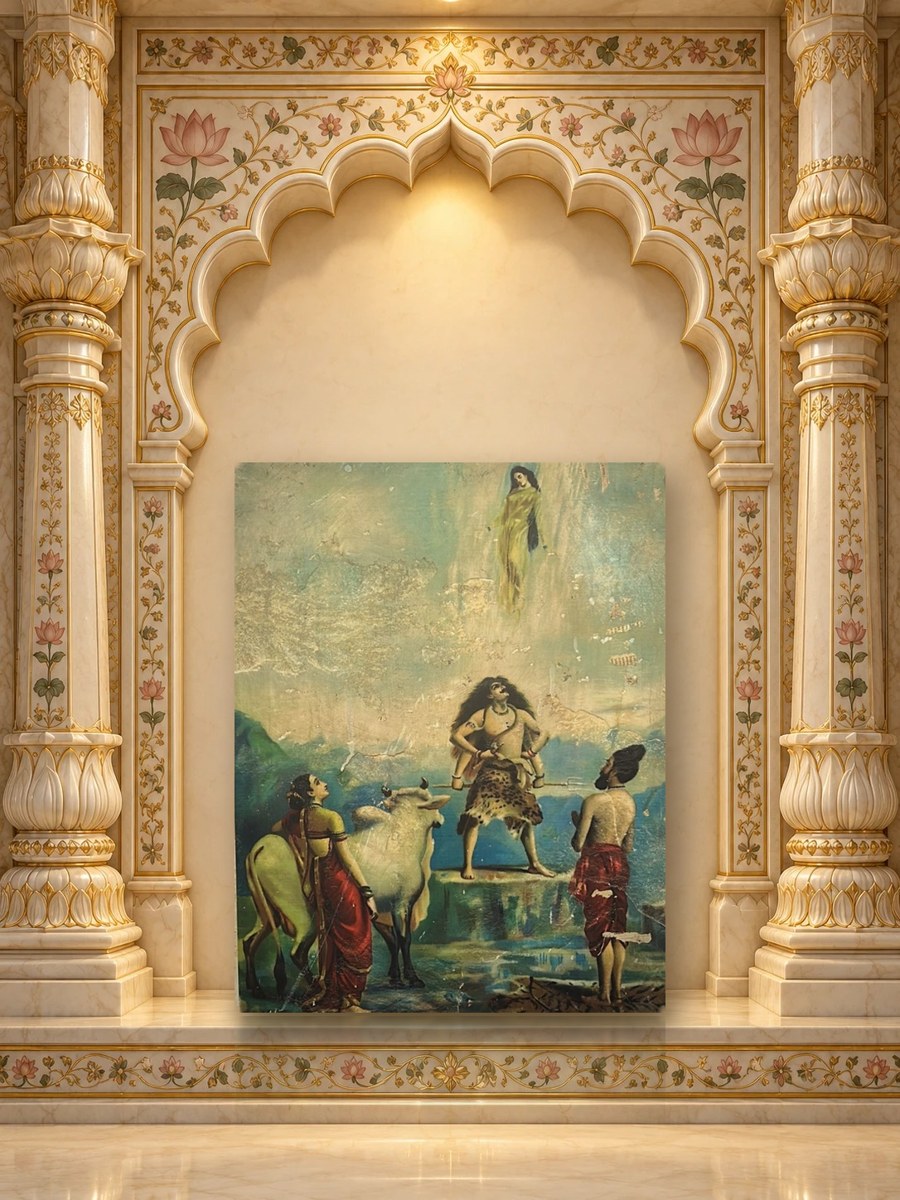
A tinted stone: the herdsman, the cow and the water
Lithographic stone
Price · private enquiry₹60,00,000
View the workAB/2026/0034
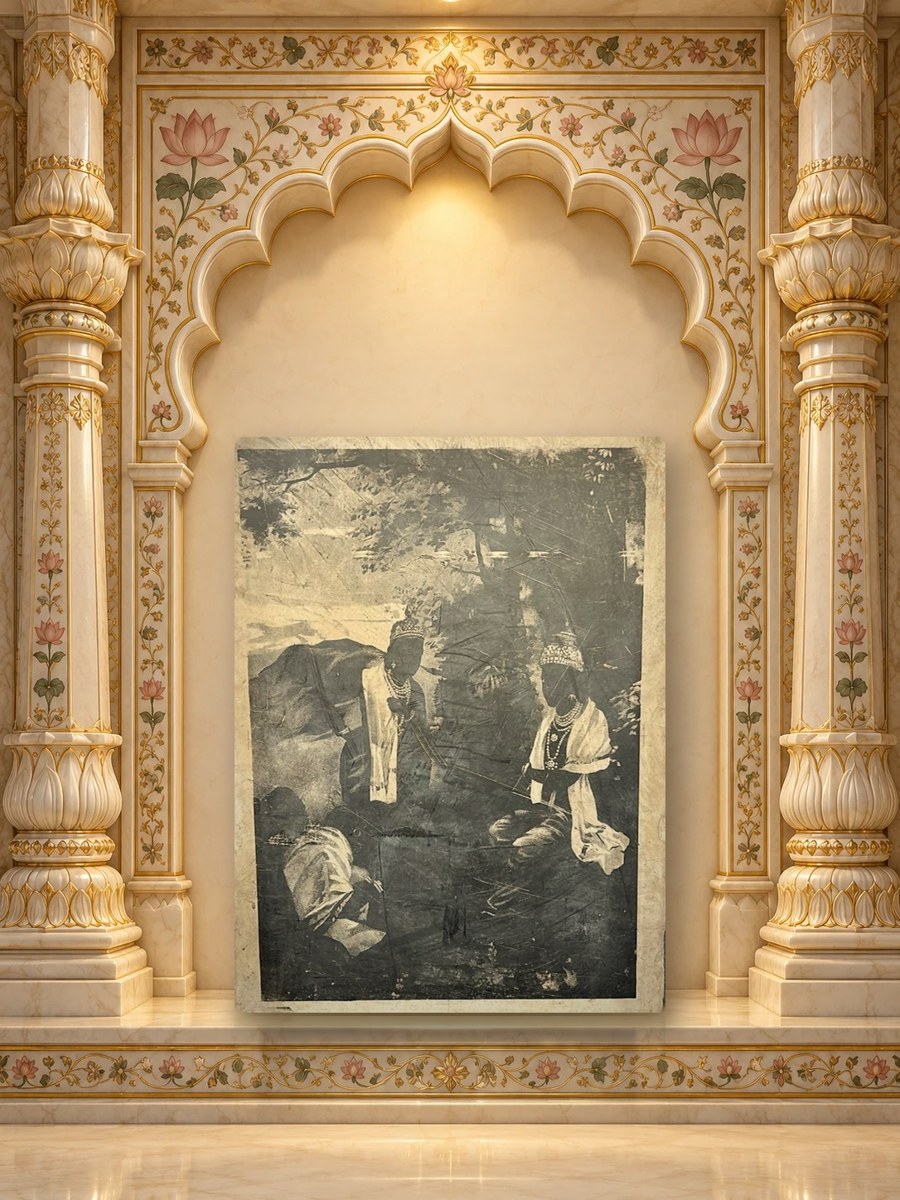
A night scene beneath the trees
Lithographic stone
Price · private enquiry₹35,00,000
View the workAB/2026/0035
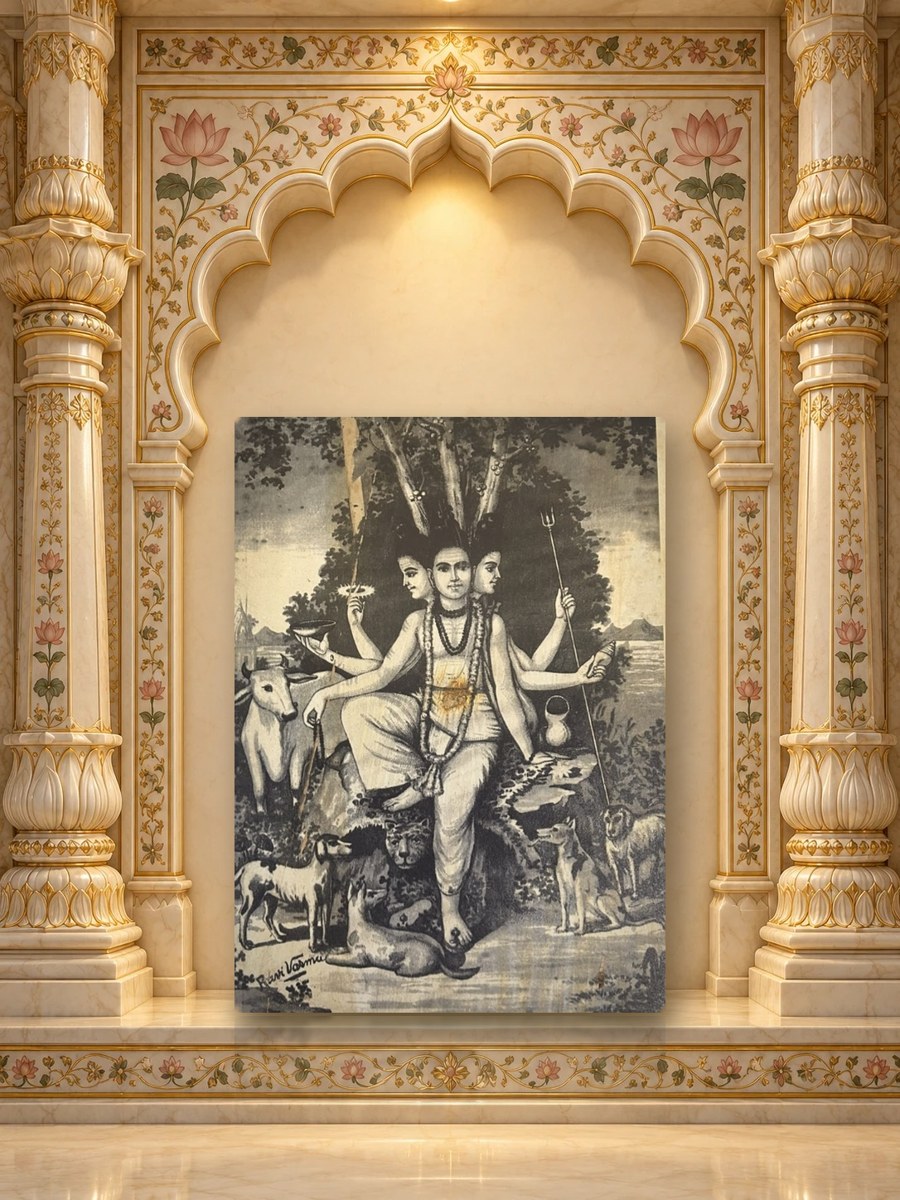
Dattatreya with his cows and dogs
Lithographic stone
Price · private enquiry₹45,00,000
View the workAB/2026/0036
AB / RRV
Raja Ravi Varma (29 April 1848 to 2 October 1906) was an Indian painter from the minor royalty of Kilimanoor in Travancore, now Kerala. He joined European academic oil painting to Indian subjects, and is best known for his paintings of the Ramayana and Mahabharata and of Indian women.
His Yashoda and Krishna sold for Rs 167.20 crore at Saffronart's Spring Live Auction on 1 April 2026, the highest price recorded for an Indian artwork. Its estimate was Rs 80 to 120 crore, and it passed the previous record, Rs 118 crore for M. F. Husain's Gram Yatra at Christie's New York in March 2025.
The Ravi Varma Press was the printing works he founded in 1894, the first oleograph and chromolithographic press in India, first at Girgaum and then Ghatkopar in Bombay. In 1899 it moved to Malavli near Lonavala, and in 1901 he transferred it to the German printer Fritz Schleicher.
The house does not offer paintings by Ravi Varma himself. It holds 20 lithographic printing stones in the Ravi Varma Press tradition, each with a fact sheet and a written record. To enquire about acquiring one, speak to Mr. Shyam Babu Naidu on +91 70212 36700. Objects of this age fall under the Antiquities and Art Treasures Act 1972, so the house sets out the registration and transfer steps in writing.
Original oil paintings are the rarest and most valuable: his Yashoda and Krishna sold for Rs 167.20 crore in April 2026. Oleographs and lithographs from his press sell for far less and vary widely with image, condition and age. The house gives a written opinion on a Ravi Varma print, oleograph or stone from photographs: write to Mr. Arnav Agarwal's Client Advisory desk.
Both spellings are searched. The painter is usually written Raja Ravi Varma (also Ravi Varma, R. R. Varma, and in some transliterations Ravi Verma). They are the same artist, born in Kilimanoor in 1848.
Speak to the house
AB / OPINION
1 · Send four photographs
The front, all four margins, the back, and one taken in raking light. Add the size and anything printed or stamped on it.
2 · A written opinion
Whether it is a stone, an early oleograph, a later offset reprint or a photograph, what the printing marks show, and what is still unknown.
3 · The law, plainly
An object more than a hundred years old is an antiquity under the Antiquities and Art Treasures Act, 1972. It may need registration and cannot leave India without a permit. We tell you what applies first.
Email the photographs Message on WhatsApp How to tell an oleograph from a reprint
One stone a day
Loading today’s stone…