
1 · Send four photographs
What we need to see
The front, all four margins, the back, and one taken in raking light. Add the size and anything printed or stamped on it.
AB / STUDY
In 1894 the painter Raja Ravi Varma started India's first oleograph and chromolithographic press in Bombay, first at Girgaum and then at Ghatkopar. In 1899 he moved it to Malavli near Lonavala. He worked with the German printer Fritz Schleicher, and in 1901 transferred the press to him. The press printed images of gods and goddesses and scenes from the Ramayana and Mahabharata in very large numbers, and carried them into ordinary homes.
The pieces here are lithographic printing stones and related items in that tradition. A stone is the surface the picture was drawn on, and every print was pulled from it. These are shown for study, and enquiries about acquiring one go to Mr. Shyam Babu Naidu. The house records the age, source and chain of title of each stone in writing, and will say plainly what it knows and what it does not. Write to the house to see that record. Read more about Raja Ravi Varma and his press.
AB / GALLERY
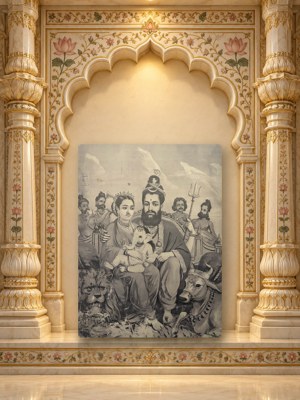 Ravi Varma Press · Shiva's family on the mountain · Lithographic stones
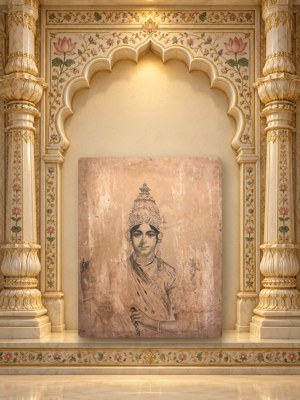 Ravi Varma Press · The crowned woman, drawn in fine stipple · Lithographic stones
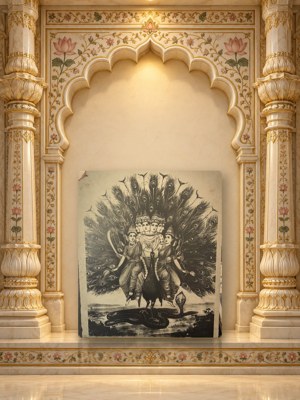 Ravi Varma Press · Kartikeya on a spread of peacock feathers · Lithographic stones
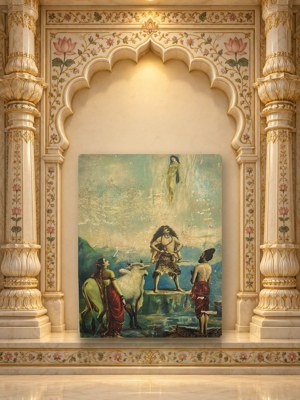 Ravi Varma Press · A tinted stone: the herdsman, the cow and the water · Lithographic stones
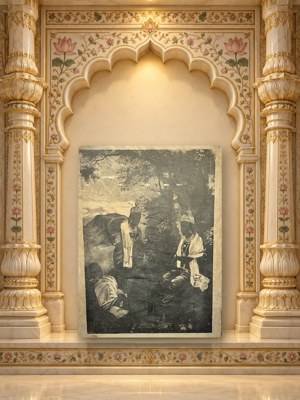 Ravi Varma Press · A night scene beneath the trees · Lithographic stones
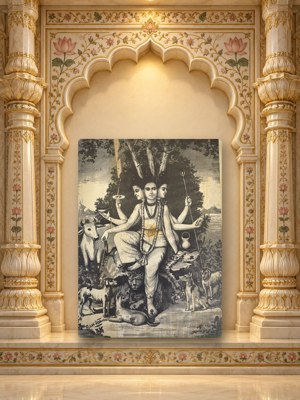 Ravi Varma Press · Dattatreya with his cows and dogs · Lithographic stones
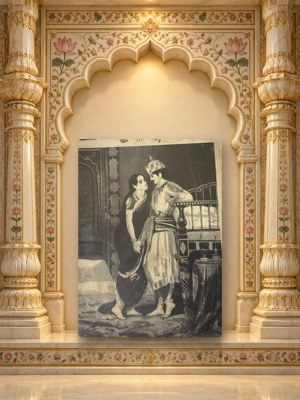 Ravi Varma Press · A couple in an interior · Lithographic stones
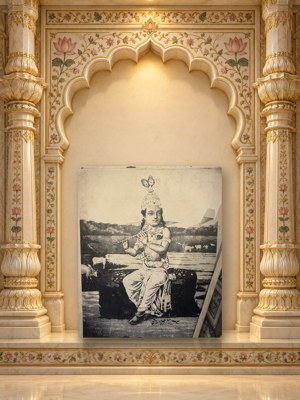 Ravi Varma Press · Krishna playing the flute on the bank · Lithographic stones
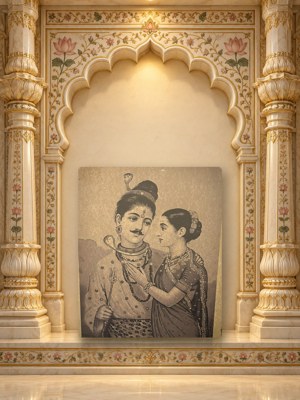 Ravi Varma Press · Shiva and Parvati, close together · Lithographic stones
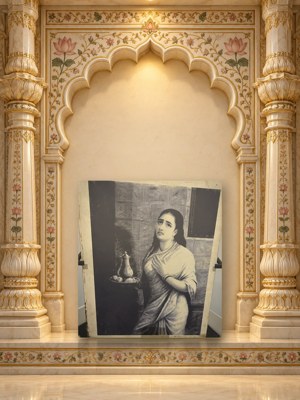 Ravi Varma Press · A woman by a water jug, lost in thought · Lithographic stones
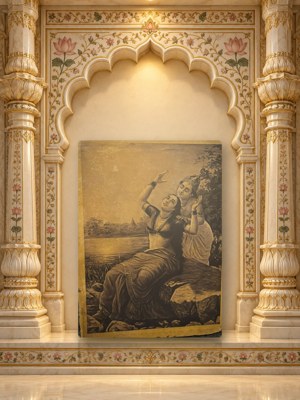 Ravi Varma Press · A golden stone: a woman gazing at the sky · Lithographic stones
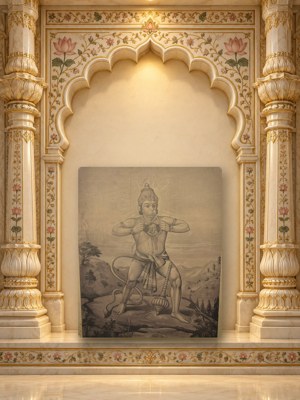 Ravi Varma Press · Hanuman on the mountain path · Lithographic stones
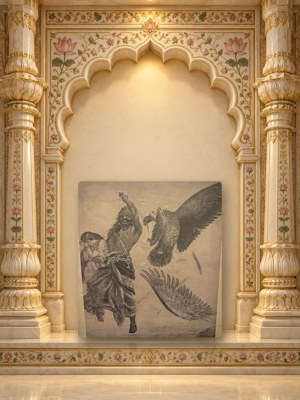 Ravi Varma Press · The eagle and the warrior · Lithographic stones
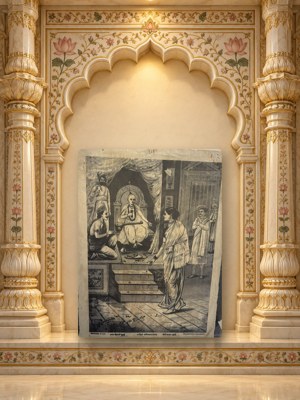 Ravi Varma Press · A woman before the seated sage · Lithographic stones
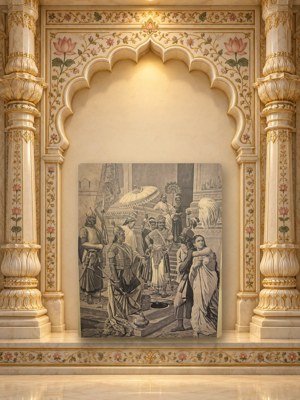 Ravi Varma Press · A royal court beneath a parasol · Lithographic stones
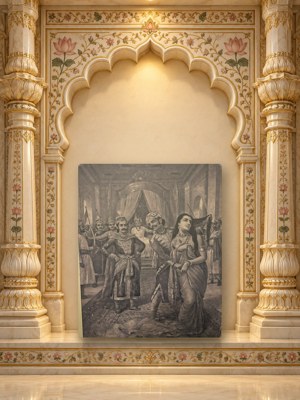 Ravi Varma Press · A king and queen entering the hall · Lithographic stones
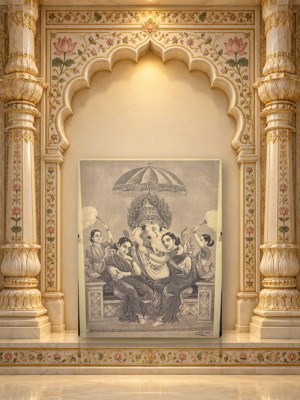 Ravi Varma Press · Ganesha enthroned beneath an umbrella · Lithographic stones
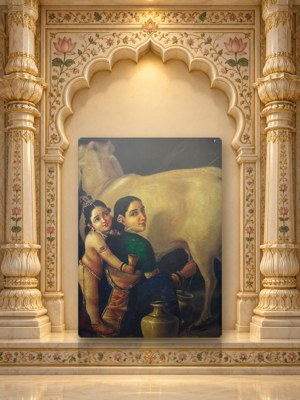 Ravi Varma Press · Two women and a cow: a framed colour work · Lithographic stones
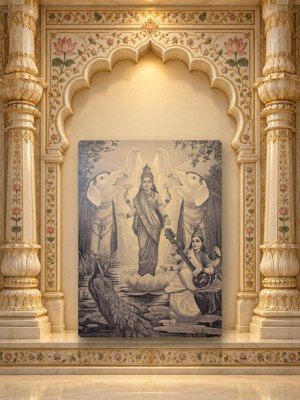 Ravi Varma Press · Lakshmi and Saraswati by the lotus pond · Lithographic stones
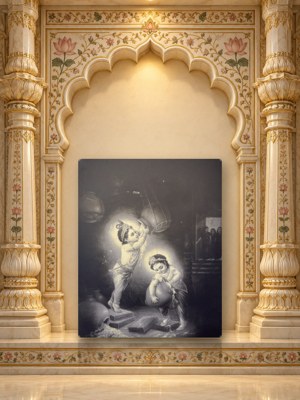 Ravi Varma Press · The butter thieves, two children among the pots · Lithographic stones
Prices are on request. The artist of a work is named in writing when the house issues its record; no attribution is printed until it can be evidenced. See also the Works page and how a work looks on your wall.
Speak to the house
AB / OPINION
1 · Send four photographs
The front, all four margins, the back, and one taken in raking light. Add the size and anything printed or stamped on it.
2 · A written opinion
Whether it is a stone, an early oleograph, a later offset reprint or a photograph, what the printing marks show, and what is still unknown.
3 · The law, plainly
An object more than a hundred years old is an antiquity under the Antiquities and Art Treasures Act, 1972. It may need registration and cannot leave India without a permit. We tell you what applies first.
Email the photographs Message on WhatsApp How to tell an oleograph from a reprint